Box Office Hit “Ted” Holds a Mirror Up to Generation Y (July 3, 2012)

ted


I am a nearly 34 year-old woman with the finely developed humor sensibilities of a 13 year-old boy. Give me your bodily function jokes, your politically incorrect puns and a dash of gallows guffaw and I am a happy camper. Throughout the years I have counted such animated television programs as Beavis and Butthead, South Park, the Family Guy and the Boondocks among my many favorites. But it must be pointed out, I come for the sight gags and stay for the often prescient social and political commentary that these programs offer the already warped mind.

So when I first learned a of a new film directed, co-written and produced by Family Guy creator Seth MacFarlane, I was intrigued. When I intimated that said film involved a 35 year-old man (played by the always delicious Mark Wahlberg) and the complex adult relationship between he and his childhood teddy bear, my interest grew. Then I heard that the titular bear, Ted, was a foul-mouthed, over-sexed, drug abusing stuffed animal come to life and I was counting the minutes until the film’s release.

The movie did not disappoint in its promise to offer something new yet familiar: a stream of poop and fart jokes, Wahlberg’s handsome face and Mila Kunis’ winsome screen charm. But the film offered something else too for those willing to look past the veneer of R-rated hilarity. Part of the movie’s message served to underscore a point I have been arguing off and on for several years, a pitfall to which I know I am not immune: the members of Generation Y are having an awfully tough time growing up.

To simplify matters, let’s work with Wikipedia’s definition of Gen Y, shall we? “Generation Y, also known as Generation We…Generation Next, the Net Generation, the Echo Boomers are the demographic cohort following Generation X. There are no precise dates for when Generation Y starts and ends, and commentators usually use birth dates ranging somewhere from the later-1970s or early 1980s to the mid 2000s.”

If we accept this explication of terms, this puts yours truly right smack at the beginning of this demographic. It is also worth noting that the bulk of Gen Y’s members are the progeny of late-era Baby Boomers, a state of affairs which cannot fail to offer a relationship between the sense of entitlement that myself and my fellow Gen Yers often display. We were raised by our credit-relying helicopter parents (generalizing) to believe we had certain inalienable rights: the right to be special, the right to be happy, the right to warrant media attention and most especially the right to abdicate from situations that are not to our liking. Toughing it out stoically doesn’t appear to be part of our vocabulary.

And so it is in Ted. The main character, Johnny, is introduced to audiences as a lonely little boy in the 1980s. Growing up in Boston as the only child of doting parents, his is a case of wish-fulfillment gone awry. He and his parents spend so much time pretending that the teddy bear is the weird kid’s real pal that when the fantasy becomes reality, there’s no eventual lesson about Johnny trying to improve his relationships with humans – just relief that they don’t have to worry about him talking to himself anymore.

Cut to the present-day where Johnny is drinking and pulling bongs on the couch with a now 27 year-old Ted on a daily basis. The man-child is underemployed by a rental car agency while his more stable girlfriend (Kunis) holds down an adult gig and pays most of the rent on their gorgeous brownstone (presumably – I know what it costs to live in Boston).

That the movie has several different happy endings is more than just onscreen fiction. I have plenty of contemporaries who just never emerge from this pattern of underachieving, and they certainly don’t do so with six pack abs. Ted is more than a comic film. It’s a cautionary tale with a message that could be easy to miss underneath the shock humor. 35 year-olds, by and large, are still babies.

I’m going to go do a tequila shot, cuddle my Cabbage Patch Doll and think more about it.

Bald Insecurity (June 26, 2012)

Bald


Boyfriend/Hairdresser 8 weeks ago: “Come on! It’s always something with you. I can’t see anything!”

Sister 4 weeks ago: “Is it because you dye your hair too often?”

New Boyfriend/Hairdresser 3 weeks ago: “Ok, now I see what you’re talking about.”

A woman historically known for her wild, curly red locks is starting to part with them, at the ripe old age of almost 34. And with this development, wherefore goes the identity?

The summer I turned 13, I took a long look in the mirror and decided that with the natural attributes of ghostly pale skin, bright green eyes and a smattering of freckles, Mother Nature was in error when she doled out a head of medium brown hair. If I was going to be continually mistaken for Irish, I might as well go all the way with it.

Except for a brief 90s dalliance with black (a huge mistake influenced by Nine Inch Nails and Nirvana) and a foray into blonde highlights last decade (the things we do for love), my hair has held one fiery shade or another for over 20 years. As the tresses curled evermore with each passing year, I alternately cursed the frizzy, unruly mess yet gave silent thanks that I was gifted with a conversation piece, a physical manifestation of my personality: untamed, sometimes glossy, frustrating and colorful.

Though I fancy myself a believer in the overused “beauty is skin deep” maxim, I rarely applied that latitude to myself. It was never enough that I was a smart kid, decent at sports with other accomplishments. I wanted to be beautiful, the kind of gorgeousness that stopped people in their tracks. I wanted to ditch the huge Haray Caray glasses that acted as a screaming billboard for my near-sightedness. I yearned for the day I would have the independence to have my awful, crooked chompers corrected through the miracle of orthodontics. I wondered if I would ever grow big girls boobs (still waiting at 33). I didn’t want to be creative and odd. There was a time I would have surrendered everything that makes me, well me, if it meant loving the image reflected in the glass.

As I grew up, sought the services of a good therapist and did the painful work of looking inward, I accepted what I had known all along: you can’t have it all and it’s a pretty idiotic waste of time to moon over your personal aesthetics. So as I have alluded in other posts, I learned to kind of like and appreciate the rest of me. Until…..

8 weeks ago when I began to notice a spot near my left temple that was hairless. I’m not talking about short baby hairs that might reflect pulling, hairbrush damage, etc. I mean bald – like it had been waxed clean. My eye, long trained to zero in on real and perceived flaws, moved to the spot by the day, then the hour, then the minute. What the hell was happening and why?

Alopecia was the first suggestion offered by the doctor, maybe stress related. Even as it started to be accompanied by intermittent headaches and nausea, I was told I shouldn’t worry. Fretting could expedite the pattern, but asking me not to worry about an eyesore which I cannot control is like asking water not to be wet. So as the spot grew in the ensuing weeks, as topical steroids were doled, I started to consider that I might soon be without my signature physical attribute. Would my personality change without the aesthetic weapon that seemed to justify a “take no prisoners” attitude? The absence of my loud hair, an armor to hide the quiet, sad shame often experienced might leave me naked and defenseless in metaphysical and real ways.

A battery of tests this afternoon will shed additional light: autoimmune disease, brain tumor, anxiety disorder. These first of these two diagnoses are obviously somewhat problematic. But all I can think about is my hair. I don’t want to lose it – or myself, especially when it took so darned long to be found.

An Ode to Cancer: On Year Later (June 12, 2012)

You came to my door
When I was getting divorced.
You couldn’t have picked a messier time.

I walked around in a daze
Feeling crazed,
Because even after she said the words I felt fine.

Surgery was scheduled,
Estranged spouses bedeviled,
Unable to work together.

Recovery alone
In my studio home.
Thought I’d be “that poor woman” forever.

After a week and a day,
Back on my way,
Like it never happened at all.

Until the divorce was done
And the new underwriter won,
A “pre-existing condition” free fall.

You went in remission
And I accepted the condition
That I had been wasting my hours.

With putting those first
Who were often worst
Letting mind and body go sour.

So I focused on work,
Learned to admire my quirks
Fell in love again with my friends.

And I learned to say “yes”
To almost any quest,
And with past wrongs make amends.

So maybe I should thank you,
You created a milieu,
To foment a real rebellion.

You couldn’t hold me down,
And now that I’m found,
I see a lovable hellion.

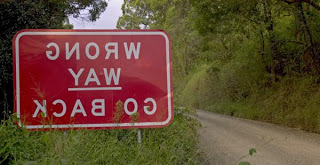
The Wrong Way (June 5, 2012)

Wrong Way


True confession: I am not the most useful person. I hate to cook and have never excelled at it anyway. Please don’t ask me to fix or assemble anything. It’s like I have hands made of stone. I ride my bike upwards of 75 miles a week but do you think I can master filling the tires with air (Hey! The process involves an adapter!)? Mother Earth help me if I ever find myself stranded with a flat.

When my sister and I were younger, she used to amuse herself by asking me to draw. One time she chose an elephant as the subject, and as I have no trouble making an ass of myself, I obliged. I wish I had a .jpeg of the finished product. My elephant was illustrated from the head-on perspective and Jenny held onto to the artwork so she could refer to it throughout the day while bursting into tears of laughter. I had unironically constructed a rendering of IHOP’s Funny Face Pancake.

My friend Rob, a former Navy rescue swimmer and certified RKC Level 2 trainer says that when the breakdown of society arrives and we’re all living in trees (Rob is also a well-informed and detailed conspiracy theorist) I will have to sleep my way to survival, else I will be dead in 15 minutes. I think there is a compliment about my looks in there somewhere so I’ll take it.

One thing at which I excel, however, is hard, tireless work. And I’m not always certain this is an asset but I am possessed of a stubbornness that rivals that of Tyco Brahe, the 16th century Danish noblemen and astronomer. Brahe died of a bladder infection 11 days after refusing to get up and urinate during the middle of a long banquet in Prague. He felt it would have been a breach of etiquette. This totally sounds like something I would say.

The refusal to back down in the face of adversity is alternately a blessing and a curse. While it parents a survival instinct that has enabled me to process and move beyond vicious life blows, it also begets a tendency to ignore loud, blaring sirens in my head that try to stop me from moving in the wrong direction, figuratively and literally. The “head down and brace for the worst” approach can lead one to misinterpret the difference between necessary persistence and time wasting, bullheaded exhaustion.

I have been contemplating the blinders long worn as a method of getting through the day. It’s like a weird sort of empowered learned helplessness. Assuming that a given set of circumstances is inalterable, I have performed miraculous feats of fortitude bordering on masochism in order to prove that I can’t be destroyed. It’s at once pathological and a condition which instills a perverse form of pride.

The thing is though. It’s that downside, the part where I fritter away months or years enmeshed in predicaments from which normal people might sensibly extricate themselves, that plagues my waking nights. It’s a pattern I am trying to tackle. Recent decisions made in support of pursuing a healthier me have brought pain to others, but hopefully it’s of the quick sharp paper cut kind, the variety forgotten in 24 hours. Because I am trying to recognize that long, drawn-out Puritanical fortitude won’t earn me or anyone I care about anything but lost time in a short life.

Motown Meltdown (May 28, 2012)

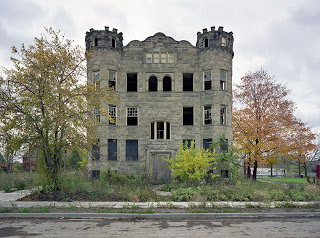
Detroit


I want to talk about something in a politically non-partisan way. It’s true I am a liberal Democrat by stripe and spend part of my freelance writing life as a hard blue columnist for a popular left website. But I am a human, a woman and an American first – in that order – and sometimes I witness scenes that make me wonder how anyone from any vantage point can believe that this country is on the right track.

This past Memorial Day Weekend I ventured with Steve by Amtrak to the suburbs of Detroit, Michigan. It is here that my partner spent his formative years. He attended college in the late-1980s at Wayne State University in the heart of the city, holding down various jobs before he migrated to Chicago in 1996. I traveled with him to the Motor City, the once-glorious birthplace of the automobile, the R&B Garden of Eden where Berry Gordy established Hitsville, USA and launched the Motown legend. In the 1930s, Detroit was christened the “City of Champions” owing to its successes in the sporting realm. During the first two-thirds of the 20th Century, Detroit was Americana, the symbol of society’s mechanization and social evolution.

But then the Motor City fell on some famously hard times, troubles that date back several decades. Between 2000 and 2010, the city’s population fell by 25%, plummeting in the ranks from America’s 10th largest city to its 18th.  The 2008 housing bubble burst delivered some of its loudest pops in Detroit, where a perfect storm of unsustainable subprime mortgages, crushing unemployment and falling home prices left behind scads of abandoned buildings and lots, often as far as the eye can see. Opportunistic investors can still take advantage of foreclosed homes that cost hundreds, rather than thousands of dollars. The sinking ghost town is a breeding ground for drug activity and violent crime, further eroding home values.

It’s true that White House policy over the last four years salvaged the auto industry, Detroit’s remaining lifeblood when combined with tourism/casinos and hospitality. But with local budgets strangled and plagued by red link, there are simply no resources left to level the rampant blight that welcomes visitors to town.

I was astonished when I alighted from the city’s Amtrak station last Friday evening, a structure no bigger than your average two-car garage, aesthetically dull and devoid of concessions or any comforts beyond a restroom. The station was constructed in 1994 as a replacement for the former Michigan Central Station, which closed in 1988. A quick Wikipedia search of the Central Station revealed more glory come decay. The previous structure was once identified as the tallest rail station in the world, with some 200 trains traveling in and out each day at the outset of WWI, while 3,000 workers held jobs inside the station’s office tower. Today exactly six scheduled Amtrak trains enter and depart the city each day, while less than a handful of workers enter the minimalist station.

There is no doubt that the Motown Museum is an impressive tour and a fabulous bargain at $10 per entry. But when Steve and I went in search of food after our Saturday afternoon excursion, we had real trouble locating anything more than a KFC here, a unserviceable Subway outlet with reinforced bullet proof glass protecting the counter there. I suppose I take for granted that when I walk out onto almost any Chicago street, multiple culinary options await.

And oh the heartbreaking destruction of the streets and architecture, the abject poverty, the lack of pedestrian and vehicle traffic that evokes the classic Kurt Russell film, Escape from New York.

I do not fault the citizens of the Motor City or even the local government for a failure to resolve what must seem an insurmountable mountain of challenges. It is possible that Detroit’s most glorious days are simply in the past. But that is no excuse at all for our failure to deal with the conditions of this piece of our collective history on a national level. I found myself wondering at several intervals over the course of a three-day visit, “If a tourist from another land decided to stop in Detroit, what impression would it leave of the country as a whole?” Is Detroit’s decline a metaphor for the decaying American dream, the death throes of a dynasty that can no longer sustain its promise?