Missing Friendly Fire

Friendly Fire

I sat watching Hillary Clinton’s speech at the Navy Ship Yard in New York on Tuesday night with tears streaming. As a 37 year-old woman who’s followed the career of the former First Lady, Senator and Secretary of State since junior high, #ImWithHer completely. I may have voted for Sanders in the primary (that makes two election cycles in a row with a plurality of quality Democratic options), but come on. To quote another of my political heroes, Vice President Joseph R. Biden III, Clinton’s status as the 2016 presumptive nominee is a “big fucking deal.” This is the first woman EVER to go atop a national ticket. I’m nowhere near as high-profile as Mrs. Clinton but as a career woman and ardent feminist, I know her journey has been filled with roadblocks. She’s not in the Oval Office yet (bring it Trump) but she’s done something historically important. It warranted an emotional release.

Toward the end of Clinton’s soaring address to supporters, I began crying a lot harder. Because I knew someone who would have hated everything about Hillary’s victory, a friend with whom I would have had a spirited debate about moving on from #FeelTheBern to unite the party. Because Trump is the alternative for crying out loud, and though Clinton is an imperfect candidate (as they all are), she’s a proven, pragmatic worker who genuinely cares about the country. He would counter with “Clinton is an evil crook” rhetoric and declare his support for Jill Stein. I would spit the names of Nixon and Dubya. “Misogyny” would be interlaced throughout as both accusation and social commentary. He’d insist anarchy is preferable to another machine leader. We’d probably go a few days without speaking before sheepishly picking up the phone or sending a text.

That’s what should have happened after Clinton’s landmark speech. But Todd died on Memorial Day, six days before I sat on my couch cheering Hillary, paradoxically wishing for the wet blanket he would have enthusiastically offered.

We met on the Union Pacific North Line Metra route in 2010, commuting to the same downtown Chicago office (although not explicit colleagues). I was barreling toward the end of a troubled marriage and near-permanently distracted. As I’ve explained to Bob in recent days, Todd did the initial work and though I’m eternally grateful, I’ll never understand why. Yes we both loved theater, considered ourselves ardent liberals (though he was bitterly disappointed in President Obama – another source of contention) and resided in the same neighborhood. But Todd had roughly a zillion friends as one of the most energetic and likable people in the free world. And me, at least at least then? Pretty much this.

As Todd and I became better acquainted, I learned he’d survived illness, relationship loss and death. Over the course of our six-year friendship, he also recovered from a very serious car accident. Todd didn’t even drive, mind you. He was struck on the sidewalk. Anyone else might have sunk into bitterness at the cruelty of fate. This man had tenacity, spirit and yet counterintuitively, was rather blasé about it. Todd casually and unaggressively knew he was awesome – beaming that certainty at everyone he loved. This made him the best kind of friend – one always there in crisis, with the authenticity to tell when it was time to stop singing the “Big Railroad Blues.”

Todd was a huge Grateful Dead fan and a socially conscious, fun-loving hippie aesthetic infused everything he did. I’ll never know for certain but I think he found my own existential struggles toward inner peace amusing. I’ve made progress but you can’t wash the Type A out of a girl entirely. When my friend felt in need of a red-faced, arm-waving, outside voice volume rant (say, when Mitt Romney made his infamous “47 percent” remarks), he knew where to turn. And though we were temperamentally different, we loved each other symmetrically.

My pal died just a few hours after we enjoyed soft pretzels and cider at a neighborhood German pub. He was feeling great: excited for a boatload of summer plans he’d made, philosophical about a recent breakup and ready for whatever came next (as always). We exchanged affectionate hugs and as we parted, I thought about how glad I was that I was in a place to do more of the emotional work in our friendship. Although Todd carried me over the starting line, over time we walked hand in hand. Once in a while he even did the leaning.

Todd was buried in his home state of New Jersey last weekend. On Saturday June 18, Chicago friends and family will have their chance to gather and celebrate his life. Todd was a super connector, fond of introducing people he loved to one another. As a result, perhaps one of his final gifts, I’m not alone in grief.

But we won’t argue about Hillary Clinton’s candidacy. Ever. And I hate it.

Trump Smash: Paul Ryan’s Heroic Media Image Finally Cracks

paul-ryan-ballcap

“Fittingly, in a year where Trump is playing human tire fire with one of America’s two established political parties, Ryan’s game with the media has grown more complicated. Now that he’s officially left the #NeverTrump movement, he’s completely beholden to the whims of a candidate who worships no one but himself.

It was never clear to begin with that the Donald gives a shit about Ryan’s awesomely lopsided legislative agenda. And a mere week after his “sudden” endorsement, the Speaker tussled with Trump’s racist, embarrassing feud with U.S. District Judge Gonzalo Curiel. Don’t look now but the con man has been conned.”

Read the full post at Contemptor.

Constellations

constell
Jessie Fisher (Marianne) and ensemble member Jon Michael Hill (Roland)

When the curtain rose on the press opening of playwright Nick Payne’s “Constellations,” now running at the storied Steppenwolf Theatre in Chicago, I indulged a cynical eye roll. Another meet cute rom com, even if this one features two pulchritudinous Brits (fair or not, dreck is a lot more tolerable when delivered with an English accent)? No. Not at all. The work, written by Nick Payne and directed by Jonathan Berry, is more than another take on “Men Are from Mars, Women Are from Venus,” although there’s plenty of interstellar discussion.

The compact 80-minute production features just two characters, beekeeper Roland (Jon Michael Hill) and theoretical physicist Marianne (Jessie Fisher). They interact on a sparse but novel set that allows the audience to sink into the repetitively rich dialogue. That’s not an oxymoron. Several lines are repeated upwards of 10 times, yet each delivery feels fresh because it is, in fact, something new.

Confused yet? Press materials describe the plot as follows: “Roland and Marianne meet at a party. In that single moment, an unfathomable multitude of possibilities unfold. Their chance meeting might blossom into a meaningful relationship or a brief affair; it might lead to nothing at all.” “Constellations” in fact covers nearly every possible relationship pitfall (infidelity, lies, illness, unrequited devotion) or blessing (proposals, reunions, meaningful conversations with I-Thou transcendence) in rapid fire. And it works. Beautifully.

This owes no small debt to the gifts of the two leads. Hill and Fisher are tremendous. As immersed as I was in the stories of Roland and Marianne, the third wall was broken more than once to marvel at Fisher in particular. The actress’ ability to use her body and cadence to make the same phrase mean completely different things with a microsecond’s transition — stunning.

The intensity of both performances almost leaves one grateful (for the actors’ sake) that the production is brief. They sustain eye contact, move around each other in charged circles and are alternately desperate, overjoyed or bereft. There are few (if any) props. There’s nowhere to hide or take a restorative breath.

Early last week, just two days before the show officially opened, I lost a very close friend, very suddenly. In the midst of an acute grief process, ideas of infinite possibility, of alternate universes where our beloved sick and infirm enjoy happily ever after, are both torturous and becoming. But on whichever end of the misery/jubilation continuum audience members lie, “Constellations” will yield thought and discussion about the almost limitless range of human behavior and emotion.

In times of celebration, healthy egos bask in what feels like inevitable reward, while the more humble marvel at providence and good fortune. In tragedy, some interpret setback as their destiny while others obsess over what might have been done to alter the outcome. “Constellations” has a message for all of these demographics. Every experience is simultaneously pain and pleasure. As the production’s press release suggests, Steppenwolf’s early summer offering explores “a myriad of possible lifetimes… the extraordinary richness of being alive in the universe.”

The production is a cerebral champion. See it.

“Constellations” runs through July 3 at the Steppenwolf Upstairs Theatre, 1650 N Halsted Street, Chicago, IL. For information or tickets, call 312-335-1650 or visit the Steppenwolf Theatre website.

Rebecca Gilman’s Soups, Stews. and Casseroles: 1976

Soups
Cliff Chamberlain as Kim Durst and Ty Olwin as Kyle

The very first production I ever saw and reviewed on behalf of EDGE Media Network was 2009’s “The Crown You’re In With.” Running at Chicago’s legendary Goodman Theatre, the work was my inaugural Rebecca Gilman experience. An artistic associate of the company as well as a member of the vaunted Artistic Collective, Gilman is an original talent with the ability to weave stinging sociopolitical commentary into unapologetically human stories using sharp, witty dialogue.

The Chicago premiere of “Soups, Stews, And Casseroles: 1976” marks the eighth collaboration between Goodman and Gilman, a slate of artistic offerings that also includes “Luna Gale,” winner of the 2016 Los Angeles Drama Critics Circle Award. The newest production bears a hackneyed tagline that belies its intelligence: “Life was sweet in a small Wisconsin town… then corporate America came to the table.” The good news is this marketing sin is entirely forgivable.

Dramatic voiceover trope aside, the destructive themes with which the script grapples are appropriately ominous. Because when the curtain rises on the small-town Wisconsin Durst family, introducing them as completely dependent on the area’s only large employer, Farmstead Cheese Factory, we already know how the story ends. And it’s not happily. “Soups, Stews, and Casseroles: 1976” tells the decimation tale of good working class manufacturing jobs in America over the last 40 years.

Corporate greed, globalization, families without options forced to take “progress” on the chin. Sound familiar? It’s meant to. Artistic Director Robert Falls and playwright Gilman, now collaborating on their fifth Goodman production, have ironically evolved into the well-oiled narrative machine so hated by the fictional Farmstead workers.

Supported by a flawless cast that includes Chicago theater veteran Cliff Chamberlain as Durst family patriarch, Kim, “Soups, Stews and Casseroles: 1976” is almost operatic in its depiction of the slow-motion destruction of an entire way of life. We know from the vantage point of 2016 that working and middle-class families continue to be squeezed by economic changes that began long before the Great Recession.

Gilman uses the hardworking, ambitious Durst family to tell the story of organized labor purposefully busted by the pursuit of greater profit margins. But the finished product is evolved beyond from the ham-fisted propaganda of Upton Sinclair’s “The Jungle.” The Dursts, including Kim’s college dropout wife Kat (Cora Vander Broek) and precocious teen daughter Kelly (the fabulous Lindsay Stock) are fully-formed characters. There have been choices and sacrifices. There are regrets and valid fears for the future. There are complicated dynamics between people who love each other honestly (and dishonestly).

Even the supporting characters avoid one-dimensional stereotype in the capable hands of Gilman and Falls. Elderly socialist neighbor and family friend JoAnne (Ann Whitney) is a surrogate mother to Kat and Kelly, not a precious caricature of Bernie Sanders talking points. And Angela Reed infuses Elaine, the wife of the cheese factory’s new corporate manager, with a loneliness and eagerness to connect with something real that removes some of the venom from her painful choices.

“Soups, Stews, And Casseroles: 1976” captures an elusive moment in time. When exactly did the “American Dream” with its promise of shared success for hard work and loyalty, start to slip away? What could we have done to stop it? While attempting to locate the beginning of the end, Gilman’s script also explores the flaws in armchair quarterbacking.

To watch the emotional, complicated plight of the Durst family is to understand that small moments and decisions have consequences bigger than one nuclear household. Day-to-day survival often requires the conscious suppression of long-term strategy. Americans can’t afford to deliberate when they have to eat. This is no less true in 2016.

In short, we have another Gilman/Goodman winner in town. It’s going to be a busy summer season of quality theater, but this one is a don’t miss.

“Soups, Stews and Casseroles” runs through June 19 at Goodman Theatre, 170 N Dearborn Street, Chicago, IL. For information or tickets, call 312-443-3800 or visit the Goodman Theatre website.

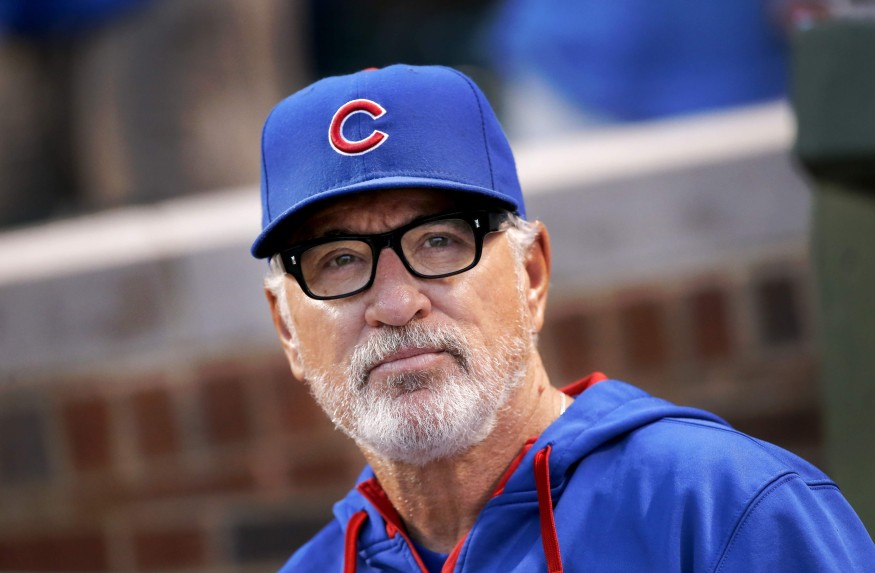
Maddon & Company Embrace Target with Red Hot Memorial Day Winning Streak

Joe M

“Holy cow! What a ride we’re enjoying. It seems as if the boys in blue took the pre-season advice of Manager Joe Maddon – and are running all over the competition with it. More than an approach to avoiding the team’s historical arc toward self-destruction, Maddon’s directive to ‘embrace the target,’ has removed the fear of success from a battered organization. And its fan base.”

Read the full post at Wrigleyville Nation.