The Lessons Roger Ebert’s Life Has for the GOP (April 7, 2013)

roger-ebert

It’s been a busy news week inside Washington and out. In the sports world, we have the coaching abuse scandal presently rocking the Rutgers University campus and reverberating across the State of New Jersey. In the national political realm, we await two important decisions from the Supreme Court related to marriage equality and its application toward our LGBTQ citizenry, even as Obama’s opponents continue grasping for novel ways to attack the POTUS. Did you hear the one about the President calling California litigator Kamala Harris “the best-looking attorney general” as part of laudatory remarks about her skills and professionalism? Were you offended? Me neither.

But for lovers of film, and most especially, residents of Chicago, the dominant narrative of the week was the retreat of celebrated film critic Roger Ebert. It was only Tuesday that the icon took to his blog to announce a “leave of presence,” a step away from the weekly demands of his column for the Chicago Sun-Times. The theory was that the decision would allow Ebert to focus on battling a resurgent cancer. Before we had time to adjust to his reduced presence, Ebert died just two days later, leaving a legion of admirers bereft.

Although the Pulitzer Prize winner was not a political figure, that didn’t stop him from sharing his civic views early and often, most recently in the active Twitter feed that offered Ebert his tenth act on the pop cultural stage. Many of these tweets contained solid  advice for elected officials on both sides of the political aisle. On March 10, 2012, concerned about he President’s debate performance against opponent Mitt Romney, he volunteered, “Obama needs to use the ‘Bush’ word. #debate.” Cycling back to the previous Presidential contest, Ebert sent this piece of wit across the Internet: “Facebook’s 420-character limit proves doable with @SarahPalinUSA’s policy statements.”

But beyond this clear and incisive commentary, there are many ways in which Ebert’s philosophies serve as a blueprint for course correction that the hopelessly adrift GOP so badly requires. I’m serious. Hear me out.

Let’s take Ebert’s imprint on the World Wide Web as just one example. In a very real way, blogging and social media restored the critic’s voice after he had lost it, and much of his jaw, to a battle with thyroid and salivary gland cancer. It is important to remember that the man was 70 years old and began his career when “status updates” meant pulling out the electric typewriter and mailing the finished product via USPS. Ebert, rather than running scared from New Media, used it to share his topical musings and promote his brand. This sort of nimble adaptability separated Ebert from the Caucasian, graying male peers that still represent the bulk of the GOP’s membership. Consider RNC Chairman Reince Preibus’ recent post-election “autopsy” report, which indicts the party for its failure to connect with youth voters and other demographics, on the ground as well as on the Web. The GOP’s stiff fear of change continues to be an albatross around the neck that never weighed down Ebert, as diversely popular at the time of his death as he had ever been.

Another lesson from Ebert’s life to which today’s Republican Party would be wise to attend is perhaps the toughest one of all or today’s Grand Old Party to grasp. Collaborating with rivals can produce epic greatness. You hear me, John Boehner? Ebert famously said that when he was originally asked to co-anchor the popular show that eventually became At the Movies with his contemporary, Chicago Tribune critic Gene Siskel, he had little inclination to team up with “the most hated guy in my life.” Imagine all we would have missed had Ebert not reconsidered. Taking a page from Abraham Lincoln’s formula for greatness, Ebert was self-aware and gracious enough to comprehend that butting heads with adversaries produces the need to consider and articulate one’s viewpoint in ways that surrounding oneself with sycophants cannot.

And when you find yourself backed into a corner, overcome by the growing awareness that your position is no longer tenable, it’s even ok to change it! Imagine that! Check out this excerpt from the critic’s Wikipedia page:

“Ebert revisited and sometimes revised his opinions. After ranking E.T. the Extra-Terrestrial third on his 1982 list, it was the only movie from that year to appear on his later ‘Best Films of the 1980s’ list (where it also ranked third). He made similar revaluations of 1981’s Raiders of the Lost Ark, and 1985’s Ran.”

You too, Republican party members, can take your place in a thinking culture constantly re-evaluating its viewpoints, co-opting that which makes sense while discarding that which doesn’t. You just have to want it. It is not necessary to cling to discarded dogmas from yesterday out of a cowardly fear that you can’t win a primary. Who knows? People might even respect you for having a mind of your own. Consider the possibilities.

As a nation, we will miss Roger Ebert for many reasons. But not insignificant among them are the dedication to learning and growth, the lack of arrogance and the genuine humility that allowed us to feel as though we knew him personally. An increasingly tone deaf and detached GOP could learn much from his example.

The #22 Clark (April 4, 2011)

TheNumber22ClarkSmallHeader

A little over a week ago, I stepped out the front door to meet a girlfriend for brunch. It was an unusually warm early Spring afternoon in Chicago, 60 degrees and sunny – the perfect day for baseball.

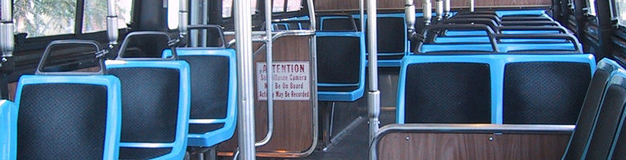
I had chosen to take the #22 Clark bus south to meet my friend at our chosen destination, a Scottish pub in the City’s Lincoln Park neighborhood. The Clark bus is one of those lines that seems to extend forever and goes through so many of Chicago’s key neighborhoods. Start riding at the northernmost extreme, and by the time you reach downtown, you’ll have passed through the trendy LGBT neighborhood of Andersonville, taken a gander at historic Wrigley Field, whizzed past the Chicago History Museum and landed in the thick of it all in Chicago’s Loop.

I boarded the bus at 11:45 AM, just in time to catch the beginnings of a crowd headed over to the Friendly Confines for Game 3 of the Cubs’ home opening series against the Pittsburgh Pirates. The Cubbies are an institution in the Windy City, one of the National League’s original teams founded in 1876. Yet 135 years later, there’s still something so magical about those early season games: the predictably uneven April weather which can have you reaching for your winter coat or a pair of shorts with equal likelihood, the unblemished statistics of the Lovable Losers, a time when you can still believe this might finally be the Cubs year.

On this afternoon, shortly after I took my seat on the crowded bus, a man boarded with his adorable two year-old son. Father and child, decked out in their Chicago Cubs finery, were en route to the boy’s first baseball game. At any time, I would have been struck with this child’s preternatural cuteness: dark red hair, fair complexion, precocious yet clumsy walking ability and the hugest smile I have seen in awhile. His vocabulary, rather limited at this stage of toddler life, was big enough to convey the child’s most important thoughts, alternating between “Are we there yet?” and “baseball!” I am nearly 33 years old, and I could relate.

The boy’s father was nearly as excited as his son. The thrill of being able to share a beloved experience with his offspring, introducing the uninitiated into the magical world of balls and strikes, the beauty of whiling away an afternoon with peanuts and crackerjack, the man’s joy was palpable through the crowded bodies and smell of exhaust. And though this scene was one of honesty, delight and love, it kicked me right in the gut.

I am about to be divorced – for the second time. My two failed attempts at matrimony produced no children, a scenario for which I am usually grateful. I have made the conscious decision to leave my womb barren and given my track record with “forever,” I am grateful that I have not subjected another generation to my personal instability. 99.9% of the time, I am at peace in a world in which I am beholden to nobody as I struggle to find my place.

But oh how that 0.01% can hurt, as it did last week. As I smiled at the boy and his father, passing the short ride to Wrigley in innocent, excited conversation, a small voice inside my head began to grow louder and more demanding. “Who will remember you when you’re gone? What have you taught anybody? And for God’s sake, why is it so damned hard for you to hold onto love?”

How can it be that something a majority of the world does, like settle down with someone and have a couple of kids, is so thoroughly beyond me? It is my habit to ask rhetorical questions for which there are clearly no answers.

A minute or so after my silent foray into existentialism, I felt awful for making a beautiful moment between a father and son about me. The writer’s pitfall I guess. Nothing really happens unless it relates to the self, right? Then I realized, as I continued listening to their happy chatter, that my aim was one of a social scientist, as if by eavesdropping on the easy conversation of the fulfilled, I could figure out the formula. I might be able to crack the code of “normalcy,” absorb it by osmosis or something, and leave the bus somehow more whole, more open to giving and receiving love than I had boarded it.

But before my work was done, the charming duo reached their destination. The boy excitedly bid everyone aboard the bus adieu and within moments, the two were lost amongst a sea of peanut sellers, ticket scalpers and throngs of baseball fans waiting to endure enhanced security checks. There is no inconvenience too great for the happy tailgater.

The father and son’s absence was immediately felt aboard the bus. The elderly woman who had been beaming at the two, and asking questions about the boy’s development for the last several miles, returned to her newspaper with a serious mien. The bus driver, amiable and upbeat moments ago, retreated behind his bulletproof shield, eyes once again focused on the road. And as I headed toward my final destination, a carefree brunch with a friend who had nothing real to gain or lose by my presence, I realized I may have come as close to a secure sense of belonging as I will ever get.

Rahm the Inevitable (February 21, 2011)

RahmTheInevitableSmallHeader

Now that the wide variety of political shenanigans that have come to exemplify the 2011 Chicago mayoral race have been exhausted, it seems there’s nothing left to do but wait for Tuesday’s electoral returns. At that point we may stop referring to former U.S. Congressman and White House Chief of Staff Rahm Emanuel as the “presumed favorite,” move beyond his Goliath campaign and start seeing the new CEO of Chi-town in action.

After all, there’s no way anyone could take him at this point, right? Rahmbo has five times more campaign funds at his disposal than nearest fiscal competitor, Gery Chico. His slick print ads and television spots depict the handsome, well-dressed former ballet dancer as a family man who cares about the middle class, ready to make the “tough choices” that will put Chicago back on the fast track to claiming its status as an affordable, world class city. A few of his TV plugs contain public endorsements from not one but two U.S. Presidents, current POTUS Barack Obama, as well as immediate predecessor William Jefferson Clinton.

From the moment on October 1, 2010 when Rahm Emanuel formally announced the resignation of his big-time White House post to throw his hat in the ring for the Chicago mayoral race, his candidacy had an almost pre-ordained quality. His name would certainly be the biggest in the contest, and all too often in U.S. politics, bigger means more viable. Rahmbo is a bulldog by reputation, which fits very well with the Windy City’s blue collar, tough guy image, yet he knows how to construct a sentence. The current mayor, Richard M. Daley, speaks with the eloquence of a barely housebroken pitbull, and his constituents (and machine conspirators) love him for it. Emanuel seems positively refined by comparison, no matter how many “f” bombs he drops.

In terms of name recognition, Rahm Emanuel’s only real competition comes in the shape of political hasbeen, former U.S. Senator Carol Mosley Braun. Although ignorance is bliss where Braun’s legislative past is concerned, most Chicagoans over the age of 35 well recall her terrifically tone deaf response to Newsweek contributing editor George Will’s 1998 examination of the various corruption charges against her: “I think because he couldn’t say nigger, he said corrupt.” She went on to compare Will to a Ku Klux Klansman, stating “I mean this very sincerely from the bottom of my heart: He can take his hood and put it back on again, as far as I’m concerned.”

One might labor under the mistaken belief that Mosley Braun has since learned to police the crazy, having undone her career once already. But no, that’s incorrect. Open your web browser and log onto to Google. From there, enter the search term “carol moseley braun crackhead.” What do you see? All the links you can handle reporting a January 30, 2011 incident at a live debate where Senator Braun addressed opposing candidate Patricia Van Pelt-Watkins as follows: “Patricia, the reason you didn’t know where I was for the last 20 years is because you were strung out on crack…Now, you have admitted to that.”

Van Pelt-Watkins had of course, admitted to no such thing, but move over Whitney Houston. The legendary singer’s 2006 utterance to journalist Diane Sawyer that “crack is whack” was heretofore the most infamous commentary regarding the illegal substance.

So yeah, with opposition of this ilk, Rahm Emanuel’s path to the mayor’s office has been relatively smooth sailing. I do not mean to suggest, with this review of Carol Mosley’s Braun’s uninterrupted political gaffes, that Emanuel faces no serious challengers. He certainly does. It’s just that former Richard M. Daley Chief of Staff Gery Chico and City Clerk Miguel del Valle, both respected public servants, cannot complete with the sexy, baby kissing, cash flush spectacle of Emanuel.

The thing is though, I think many residents of Chicago have grown tired of being told who their leaders will be before having the chance to evaluate. Though the town has never done much to dispel it’s reputation as a one-party, corrupt patronage operation, much like the recent liberation of Egypt by its own democracy-staved citizens, I smell a similar passion for change in the Midwest air. Three ex-governors in the last 35 years have been sent to the clink, and a fourth, Rod Blagojevich, is surely on his way. Mayor Daley may have done great things in terms of beautifying the landscape and attracting new business but anyone who has lived in the city for the last 22 years knows how much damage his interminable term has done: skyrocketing property taxes, unaffordable homes, runway gang crime and terrible fiscal decisions.

Though change is in the air in one form or another, is there anyone naive enough to believe that Rahmbo will represent a clean break from The Machine? I am still having a hard time digesting the coincidental swap of Rahm Emanuel for Bill Daley, the outgoing mayor’s younger brother, as the President’s Chief of Staff. No, there’s nothing suspect about that at all.

With Rahm demonstrating a commanding lead in the polls, 49 percent of the popular vote to Chico’s 19, it seems pointless to consider an outcome other than his total domination at the polls this week. But wait! For those of us perversely hoping for a dark horse spoiler (and no, Carol Mosley Braun, before you even start, that is not racist), we do have the prospect of a runoff. In order to prevent a general election showdown between Rahmbo and the number two finisher, the foul mouthed one needs at least 51 percent of the vote. 49 just won’t do. It’s certainly not out of the realm of possibility that some hard last minute campaigning by Chico and del Valle (who has my vote) will prevent Emanuel from sailing into City Hall on Wednesday. Run-offs are generally not the friend of front-runners because they allow time and opportunity for a once splintered opposition to develop a united front.

However unlikely, as a lover of democracy residing in a city that doesn’t see a lot of balanced elections, that’s what I’d like to see happen. I want Rahmbo, if he is indeed our mayor-to-be, to have to sweat it out at a bit more than he has. Those lame residency challenges, which Emanuel continued to swat away like pesky mosquitoes, do not satisfy the appetite for electoral combat. After 22 years of Daley hostage-taking, Chicago deserves a real fight for its future.