American Community Onlooker (January 7, 2012)


istockphoto_2813071-the-outcast


For my first blog post of 2012, I would like to share the story of a woman who nurtured a late-2011 resolve to feel more even keel about life as a mid-30s divorcee. A wizened chick who had directed much of her considerable energy to achieving independence and a thriving media career, despite tremendous emotional and other personal costs. A gal who had finally started to come to terms with her circumstances and comprehend that though we don’t always live the existence we imagined, there is a way to learn to love the universe you have created.

That is until the American Community Survey showed up in the mailbox to remind her just how footloose and unattached life really is, and how frayed from the nation’s social fabric this renders her. Leave it to the Census Bureau to create revulsion and anxiety even in a year that doesn’t end in “0.”

Though the Bureau states on its website that the ACS is issued annually, I had never been selected as a respondent. Being a curious individual and a journalist by trade, I went looking for information. This is what I found:

“The ACS is oriented around giving communities the current information they need to plan investments and services. Information from the survey generates data that help determine how more than $400 billion in federal and state funds are distributed each year…All this detail is combined into statistics that are used to help decide everything from school lunch programs to new hospitals.”

Well that all sounds good and I am nothing if not a civic-minded person. I love my community (the Chicago neighborhood of Rogers Park) and will do gladly do anything I can to better it. Naturally however, I wondered how I came to be selected to complete the survey. I learned I was chosen “as a part of a sample and represents thousands of other households like yours. We randomly select about 3 million addresses each year to participate in the survey.”

I have only lived in my studio apartment for eight months. I happen to know from mail forwarding mishaps that the previous occupants were a married couple. As I sat down to provide the requested survey information, I realized with irony that the Census Bureau may have been coveting the information of the stable ones who came before me.

The survey began benignly enough: questions about birthdate, hometown, occupation, race and income. Standard stuff. But since the well-meaning folks at the ACS plan to use the cumulative data to plan educational resources and other bedrock elements of society, naturally the queries began to get more personal and for me, uncomfortable.

17b. “Is this person blind or does he/she have serious difficulty seeing even when wearing glasses.”

Ok, well I am pretty damned near-sighted (20/1100 vision), but I am not ready for a service dog yet. Let’s continue.

  1. “How many minutes did it usually take this person to get from home to work LAST WEEK.”

Please don’t ask me why the last two words are in caps. I am not omniscient. Maybe corporate headquarters move around sometimes like magic? Anyway, I leave my apartment at 6:05 AM and arrive at the office at 8:20. Thanks ACS, I love my work but after seeing the numbers in such stark terms, I am officially depressed about my commute. What’s next?

  1. “What is this person’s marital status?”

Fine, it stings, but this is an easy one: divorced.

  1. “How many times has this person been married?”

Um, I think I need to open a bottle of wine while I finish this.

  1. “In what year did this person last get married?”

How in the world is this important information? Obviously I am divorced. How does it help the community to know when the long process of failure began?

24a. “Has this person given birth to children in the past 12 months?”

No.

24b. “Ever?”

Xanax please. Am I on Candid Camera? Again how does my barren womb aid the neighborhood? Does this open more early childcare spots for families in need if the federal government is reasonably certain that no offspring of mine will ever require one? Just tell me what the endgame is here so I feel slightly better about recording my solitude and loneliness for posterity.

I think you get the picture right? As a dyed in the wool social liberal I want to do everything possible to benefit my fellow citizens. But come on Census Bureau, have a heart. It’s a new year and some of us are trying to convince ourselves that a life without attachments is uplifting and full of promise, rather than empty and simply a matter of counting the days until we become society’s burden.

Come to think of it, maybe those rascals at the ACS are attempting to ascertain when single “households like” mine will be in need of Social Security benefits and a public retirement home. Or perhaps this survey was placed in my hands a true test of my ability to accept myself and my life choices.

Survey says?

Jumping the Shark (July 15, 2011)

Living in Chicago, some form of sexual harassment, however mild, tends to be a typical facet of the average woman’s day. I was inaugurated into this confusing and often humiliating world of gender politics at the age of 13, when I began to receive car horn honks and wolf whistles from older teenage boys and grown men as I navigated the streets solo, or with a girlfriend. For many reasons, I could not begin to comprehend the behavior of these gentlemen. I was cognizant of the fact that I was still a child, and not a very attractive one at that (then as now, I was a frustrating mix of social awareness and shallow insecurity).

As with any minor annoyance, it began to recede into the background over the years, one of those tradeoffs you have to accept as a devotee to urban life. Boys will be boys and all that.

As I entered my 30s, and paradoxically gained more confidence in my overall appearance (Botox injections, adult braces and a brilliant hair stylist and personal trainer were undeniable assets), I noticed, with a surprising degree of disappointment, that the incidence of wolf whistling began to decrease markedly. Where I should have been grateful for the opportunity to traverse the streets in peace, I was instead petulantly annoyed that the Neanderthals of the Windy City had ignored my realization of true pulchritude capabilities in favor of younger, fresher targets.

My temporary salvation from increasing awareness that I am growing older, and thus less attractive to immature fellows seeking temporary diversion, arrived at a rather unlikely hour. Last night I left the gym after a strenuous group Russian kettlebell class, and took to the streets sweaty and unkempt. I was wearing a damp t-shirt, yoga pants and an exhausted look as I waited for the Northbound Red Line train that would take me back to my studio in Rogers Park.

I was engrossed in a copy of Jonathan Franzen’s marvelous Freedom, when out of the corner of my eye, I noticed a rakish, extremely drunken young man approaching me. He could not have been 25 years old, yet with his confident smirk and Max Headroom sunglasses, he instantly reminded me of Tom Cruises’ character Brian Flanagan from Cocktail. The boy was a staggering, inebriated wild card and I was mostly concerned that I was about to witness someone die via third rail electrocution.

However, Mr. Flanagan had other plans in mind for a sweaty and irritated yours truly. “Whatcha reading beautiful?” he slurred over my shoulder.

Since I have already exposed myself as a shameless, compliment-seeking source of vapidity, does it surprise you to know this brought a smile to my face? I quickly displayed the cover of my book and figured that would be the end of the over served fella’s attentions. Not so.

“You’re pretty,” came next. Clearly, in the condition which I have described, I was as far from gorgeous as my new friend was from sobriety, but he really was adorable. In another decade, this story may have had a different ending.

I thanked my suitor politely and turned my attention back to the book as the train approached. Mr. Flanagan went quiet as well as he weaved perilously close to the tracks. However, he was apparently just saving his strength for his next attempt to engage me. This was executed via a comical attempt to pretend as though he was opening the train car doors with superhuman strength, just for me, as he loudly shouted “Move aside people, pretty girl coming through!”

The train was packed, as was the platform of would-be passengers, and by now, for a multitude of reasons, people were staring at us. They leered at Mr. Flanagan, curious as to how a young kid commuting alone could be so dead drunk at the early hour of 8pm. They were staring at me too, wondering what this disheveled aunty had done to arouse such attention.

And where I ought to have been embarrassed and revolted, I was instead pleased by this display. Clearly, this says nothing attractive about me whatsoever, but there it is.

The battle to achieve and maintain some sort of consistent self-esteem has been one of the prominent features of my time on this planet. My ego is a fragile as gossamer and subject to others’ approbation to a completely unhealthy degree. This state of affairs extends not only to my personal appearance, but my work, my social standing and family relations as well. I am introverted and standoffish by nature until I am teased out with some sort of approval. It is one of the parts of my character that I view with the most disdain, but I am actively working to resolve it.

Clearly however, my personal growth arrives in peaks and valleys. I had gleaned the wrong kind of attention from the wrong person for all the wrong reasons, yet I slept soundly knowing that I hadn’t yet jumped the catcall shark.

Forgetting to Remember Her (July 2, 2011)


Jesika


It’s hard to believe that it’s been almost two and a half years since Jesika died, and yet in some ways it feels like so much longer. Almost nothing in my life is the same as it was then. When I lost my closest female friend in April of 2009 to the briefest, cruelest battle with ovarian cancer, I was a part of corporate America, happily married (at least as far as the rest of the world was concerned), and just coming out of the fog that had previously prevented me from chasing a writer’s dream.

The world stopped for a long while after I returned from an ill-timed trip to Israel to discover that I had missed Jesika’s final days. She looked me in the eyes before I left and assured me that she’d be there when I returned, but that oxygen tank she was lugging around as she carefully spoke should have convinced me otherwise. The ensuing weeks were full of grief, funerals, eulogies and painful regret. I left my job not long afterward and pursued writing headlong. Jesika always supported me and trusted that I would find my voice. I owed it to her, who would never have the chance to fulfill her earthly dreams, to get serious sooner rather than later.

There’s not a lot of sense to be made when a 30 year-old bright, beautiful and hilarious woman is struck down so swiftly and in such a destructive way. Jesika’s life partner Kevin has since told me that one of the most demoralizing parts of watching her go downhill was the way the cancer started to affect her brain, causing her to speak periodic gibberish. I can only imagine how hard that was for him to watch, because it killed me just to hear it.

One of the few positive outcomes to a tragic wrongdoing has been my growing friendship with Kevin. I will not go into much detail because it is his story to tell, but he was prevented from attending Jesika’s funeral due to a family’s misguided need to find someone to blame for the incomprehensible. I am by no means a religious person but I felt strongly that Jesika was communicating with me, telling me to look after Kevin as best I could, since he was being denied so much, and she wasn’t here to make it right.

We were each other’s lifelines to the woman we missed terribly. I had known Jesika since the age of 14 so I could share the crazy stories of our adolescent misadventures with him. He in turn knew the Jesika of college and law school that I had missed. Between the two of us, we could form a nearly complete narrative of her life, her love and her humor. We visited her gravesite, cried together and through our shared grief and experiences, eventually formed an independent friendship of our own.

On Thursday night, we had dinner at Leona’s Italian restaurant, part of a local Chicago chain and one of Jesika’s favorites. Kevin and I hadn’t seen each other in four months, right after I decided to leave my husband and before I had my own, minor-by-comparison cervical cancer procedure. On Wednesday night, I had something close to a panic attack. I realized that I was beginning to separate our friendship from the original context from whence it sprung, and I felt a one-two punch of guilt and fear that stopped me cold. I was ashamed to recognize that I hadn’t thought about Jesika, at all, in about that same four months which had lapsed since I last met Kevin.

I am aware that human survival depends on healing. The heart cannot remain an open wound forever after tragedy, and yet that same ability to rebound can be painful in its own right. I know that I have not forgotten Jesika. She is an integral part of who I am. But since her passing, I have had so many new experiences and made so many memories that by virtue of her absence, she can never share. The memory, with its bias toward primacy and recency, tends to expend its energy on the here and now. And so it was that in a state of saddened remorse, I was suddenly assaulted with a highlight reel of my relationship with Jesika that left me crying on my bathroom floor.

Was I forgetting to remember her? As one of few people who knew her intimately, one of two souls who knew the whole truth about her death and the circumstances around it, and the only one with the bully pulpit and freedom to counteract the alternate version of the story that exists, I am invested with a huge responsibility. And yet preoccupation with my own complicated life and the damned human need to compartmentalize had led me away from the promise I made to Jesika, myself and even if he didn’t know it, Kevin in 2009. What did that mean? What did that say about my capabilities as a friend? Had I let Jesika down?

Kevin and I spent two hours over our meal at one of our girl’s favorite venues and in that time, she came back to life. I realized that the true Jesika, the full and complete bougie, sarcastic, and reality TV-loving woman, the girl who terrorized fast food restaurant owners and snuck into R-rated movies with me, is only actualized when Kevin and I conjure her together. When we meet, she is sitting with us, and probably wearing a huge smile over the fact that her two favorite people in the world have bonded.

That’s when it hit me that my close friendship with Kevin IS remembering her. It is honoring her and her life. In fact it might be arrogant of Kevin and I to assume we had any control in forming this link, initially connected by grief but continued through genuine regard and appreciation for one another. When Jesika first returned to Chicago and moved in with the love of her life, she wanted us to be friends. It may not have happened the way any of us planned, but we have fulfilled one of her greatest wishes. That’s a more effective and positive way of respecting her legacy than self-indulgent guilt.

Chicago Pride (June 26, 2011)


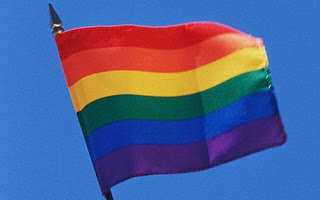
GAYPRIDE_FLAG_1251120c


For members of the LGBT community, their friends, partners and loved ones (so basically, everyone in America), this is a great weekend. Not only did the nation’s most populous state, New York, pass 11th hour legislation on Friday night that certified equal marriage rights for all of its citizens, but throughout the country, there was some serious partying already planned in the form of various Pride parades and festivals.

This morning Chicagoans awoke to the second day of a two-day reprieve from cool temperatures and consistent storms, and took to the streets for the City’s annual gay Pride parade. Even without a high of nearly 80 degrees, half-naked, beautiful, intoxicated bodies would have filled the roads and alleyways of Boys’ Town, but tolerable conditions promised to take the revelry up a notch. Locals and out of town visitors felt the enhanced giddiness in the air. Pride festivities in the town with the second highest concentration of gays by density, coming in third place in overall population, are never a dour affair. But New York’s bipartisan acknowledgement of the community’s civil rights, coupled with the waffling President’s “evolvement” make clear that momentum is finally on the right side.

As I booted up my laptop this morning and accessed the New York Times online, I was reduced to a puddle by a columnist with whom I was hitherto unfamiliar, a writer by the name of Frank Bruni. He wrote this touching piece, which cogently expresses the collective intuition that New York’s law might be on its way to becoming the national paradigm sooner than we might anticipate. Hell, even a right-wing ideologue like Rick Santorum has had to go easy on the gay bashing. It’s increasingly socially unacceptable for one thing, and for another, proponents of discrimination are becoming aware that they have a hard time publicly articulating a rational viewpoint. Homophobia is falling out of favor in the mainstream in supremely rapid fashion, and even those who sit on the fence share a discomfort with speaking about it while the cameras roll.

In 2011, the marketing acronym WIFM (What’s in It For Me?) fails the litmus test when politicians adopt an intolerant social stance. People want jobs, they want an end to staggering, endless defense spending overseas while things fall apart at home, they want to pay less at the pump. They don’t want to see their sister (like hockey player Sean Avery), daughter (I am looking at YOU Dick Cheney) or best friend (me) hamstrung from enjoying everything citizenship has to offer because of who they love. Where is the need to protect the “sanctity” of marriage while Newt Gingrich and Rudy Giuliani walk down the aisle three times?

Yep, change is in the air. When you have professional athletes, a stereotypically homophobic bunch, publicly defending the right of gays and lesbians to marry, pay joint taxes and raise healthy families, I have to tell you Intolerance, your days are numbered.

Earlier this month, the state of Illinois took its own imperfect step forward by passing legislation that permits civil unions for same-sex couples. There’s more work to be done, locally and elsewhere. But we can do it after running wild through the streets today. We’ve earned it.

Feminine Revolution (June 24, 2011)

As much as I hated the small town where I completed my undergrad degree, I stopped going home to Chicago after the first summer break.The reasons were many and diverse but chief among them was the inability of my mother and I to stand each other for more than a day or two. It took many years and a lot of therapy to be able to verbalize the internal strife and emptiness in our relationship, that I would later come to understand as my mother’s consistent distrust and competitive spirit where I was concerned.

It was always that way. At the same time that she pushed me to live out her own frustrated academic and musical dreams, I couldn’t do so too successfully or she would weep and insist that I believed I was better than her. If I was finally popular in high school, enjoyed a string of boyfriends and my father preferred to talk sports with me, the son he never had, my mother could be seen glowering not far behind.

For most of my life Gloria was this impenetrable figure, often actively undermining her eldest child’s attempts to grow and locate happiness. During one of the last phone calls we shared before I graduated college and moved back to the Chicago to begin my first job, she came right out and admitted that she found me impossible to love. A year later, she had committed identity fraud against me to the tune of $17,000, and when confronted, took off for parts unknown with little more than a carton of cigarettes and the clothes on her back. I haven’t seen her for 10 years.

There’s much more to say on this topic and a lot of other heartbreaking details to share, but the point of this essay is that the complicated relationship I acted out with my mom affected the way I related to women in general for many, many years. I always had my sister and a couple of very solid female buddies, but by and large, I just didn’t trust members of my own sex. These were the same people who bullied me in junior high because I came from a “weird” family – enough so that I had to change schools. It was a group of women in my freshman dormitory who pranked me with unsolicited subscriptions to Ebony and Jett magazines and wrote “Wigger” on my dry erase board – for the crime of dating a Jamaican man.

Most of my friends, from kindergarten up until 2010 were men – for better or worse. My estranged husband has often accused me of “acting like a man,” which is his mind typically means ambitious, opinionated, invested with a sense of freedom and agency that has kept me from “settling down” well into my 30s. We can certainly debate the merits of questioning my womanhood based on a hard won assertion of individuality, but it is nonetheless true that female friendships and I have often been at odds.

A lot of tough things have happened this year. But one thing that has altered, undeniably for the better, has been the way I relate to my feminine peers. I suppose the transformation began a couple of years ago, when I fled the safety of the corporate world to strike out as a writer. The first mentor I found, the first person to give me a real writing job and connect me with an all-female journalism group, was a talented, gracious middle-aged woman. My current boss at the small publishing firm where I am employed is a woman of fairly high repute, yet you wouldn’t have any idea based on her down-to-earth respect for my talent and genuine concern for my well-being.

I am presently surrounded by all-female co-workers, an idea which would have horrified me not five years ago. But these women, of a diverse age range and experience level, have been behind me 100 percent as I endured the trials of marital dissolution with concurrent health problems.

No matter where I look these days, I am adding some fabulous new lady to my tribe: former classmates from my graduate program, a fellow redhead and fun-loving girl from the gym, an unlikely friendship with the gal who did my makeup before a charity fashion event last year.

Positive female relationships are suddenly everywhere I turn, and I am well aware that this is every bit as much about my readiness to embrace them as it is the quality of sisters I am encountering.