What Margaret Thatcher Meant to Me (April 11, 2013)

What Margaret Thatcher Meant To Me

As an American child born in 1978, I recognize that I was not personally impacted by the “Iron Lady’s” apparently cold personality and extremely conservative views and agenda. I cannot identify with the vindication presently experienced by the “Battle of Orgreave” miners, a group who appear to have ample reason to wish ill upon Thatcher’s soul. While I feel a certain level of repugnance toward a group of men who have adopted the slogan, “I enjoy a good swim. But if someone asked me what my favourite stroke was I’d say Maggie Thatcher’s,” I understand that I haven’t walked a mile in their shoes. I wasn’t there when Thatcher’s anti-union reactionarism all but decimated a number of English working-class towns, and the livelihoods that went with them.

I know that in my own country, I have borne witness to the rise and reign of Reagan conservatism, a phenomenon that has stratified personal wealth, creating a seemingly permanent underclass of hard-working, law-abiding citizens even as corporate criminals and the top one percent have reaped exponentially larger profit margins. I know that when my parents came of age, the words “homelessness,” “AIDS” and “crack” were not part of the national lexicon and that in numerous ways, the “compassionate conservatism” of George W. Bush only worsened a number of these social crises. I am aware that Thatcher and Reagan enjoyed an intensely warm relationship and I can only infer from anecdotal evidence that the Average Joe has much to lament from this historical meeting of the minds.

But I am also a woman. And I can tell you from personal experience that when it comes to discussing Thatcher’s legacy, that’s a tough space to occupy.

As an impressionable grade school student and avid reader in search of role models (finding none at home), I came across a series called Women of Our Time in the library of my tiny Lutheran place of learning. Marketed to children in the third to sixth grade range, the series offered abridged, age-appropriate biographies of some of the most important, female public figures of the day. The book devoted to the life and career of Margaret Thatcher was the first selected and devoured. I went on to procure every other title in my parochial school’s limited holdings, and was thus introduced to such figures as activist Winnie Mandela, painter Grandma Moses and humanitarian Mother Teresa.

For profound reasons, and despite the fact that I have read thousands of novels and biographies since that time, I have never forgotten that series, or the first female subject I encountered. I was able to take for granted that it was perfectly normal for a woman with Aqua Net helmet hair, a string of pearls and a handbag to oversee the business of the second most powerful democracy. From the vantage point of 2013, I envy my younger self, as yet unaware that there would be presumptive lawmakers, overreaching religious factions and male supervisors ready with a hair trigger finger to ignore, roll back or otherwise void the advances of my gender.

As an impressionable third grader, the simplified biography of Margaret Thatcher taught me that I could be a tough as nails prime minister – or not. It was my choice and nobody else’s. I carried that self-confidence with me everywhere and used it as a blunt instrument to protect myself when family, society and religion began to tell me “no.”

And that’s what Margaret Thatcher means to me – a symbol, an idea, an ambition. I’ve progressed passed the junior lit. phase of my academic discovery. I do not canonize Thatcher. She stood for much that I abhor. But I cannot join in some of the hyper-liberal celebrations of her demise. To do so would be to wrong the opened vistas her very existence promised my younger self.
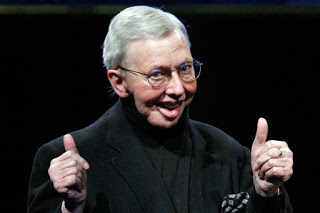
Roger and Me (April 5, 2013)

Roger and Me

Not since the 2008 passing of former Meet the Press moderator, seasoned journalist and accomplished author Tim Russert has the death of a celebrity or public figure hit me this hard. I am referring of course, to the sad news of legendary film critic Roger Ebert’s expiration yesterday, following a long and public battle with various cancers. I spent most of last evening drinking wine and reading some of Ebert’s classic meditations on the afterlife and the collapse of Chicago’s once grand movie palaces through sorrowful tears. As was the case with Mr. Russert’s untimely demise, I felt bereft, quite as if a friend or family member I knew intimately had left a gaping wound that could only be treated by traveling backward and savoring the witty, intellectual memories.
During the course of this binge, I ran into an essay Ebert wrote for The Wall Street Journal in 2010. Entitled “Why I Loathe Top 10 Film Lists,” it turns out that the man who rose to fame in part for his ability to determine quality via rank, actually had no taste for the task. But among many wonderful attributes the icon possessed, a sense of humor was decidedly one of them. So it is with a purposeful mix of gratitude, respect and good-natured ribbing that I present my parting gift to the man whose erudite musings on film, politics, pop culture and life in general will inspire my own work for as long as I am able to do it.
The Top 10 Things I Learned from Roger Ebert
1. Be a Lifelong Student
Did you know that Ebert was a doctoral candidate at the University of Chicago in the 1960s, studying English Literature, even while employed as a general reporter for the Sun-Times? I didn’t until yesterday and dammit, this little nugget only increased my respect. But beyond traditional academic learning, the critic was a pupil of the world. Long after he lost his audible voice, Ebert was still looking for information and answers to some of life’s greatest mysteries. Complacency and arrogance are boring and lead to mental stagnation. He understood this – a huge reason his work continued to connect across a career that spanned nearly half a century.
2. Writers May Enjoy Diverse, Satisfying Careers Without Moving To New York City or L.A.
Robert Ebert was born and raised in Urbana, IL, enjoyed most of his career highlights in the Windy City and literally put Chicago on the film criticism map. To this day, most aspiring writers are under the impression that a stint in the traditional publishing and Hollywood scriptwriting centers is the only way to be “seen.” Ebert did it his way and in process, collected a Pulitzer Prize, a hit syndicated television program and millions of enthusiastic readers. Following his example, I have cultivated a four-year freelance theater criticism career – over 700 miles away from Broadway.
3. Late Bloomers Rock
I didn’t get my first period until I was almost 15 years old, kept growing until I was 20, had my braces removed at age 31 and didn’t form a functional adult romantic relationship until I was 33. As odd as these delayed milestones sometimes made me feel, I was in good company. Because my hero Roger Ebert segued into the genre that made him famous only after trying and discarding several other journalism ventures. He also married the love of his life, wife Chaz, at the ripe old age of 50.
4. Collaborating with Rivals Can Be Inspiring
Ebert famously said that when he was originally asked to co-anchor the popular show that eventually became At the Movies with his contemporary, Chicago Tribune critic Gene Siskel, he had little inclination to team up with “the most hated guy in my life.” Imagine all we would have missed had Ebert not reconsidered. Taking a page from Abraham Lincoln’s formula for greatness, Ebert was self-aware and gracious enough to comprehend that butting heads with adversaries produces the need to consider and articulate one’s viewpoint in ways that surrounding oneself with sycophants cannot.
5. You Can Have Strong, Divisive Opinions and Still Be Universal
This claim would seem to be an oxymoron in the overly politicized and hyper partisan 21st century, but Ebert personified it. An avowed atheist and liberal as well as a stinging pundit gifted with a turn of phrase, the icon nonetheless engendered almost universal esteem. Film director David Wain, a frequent target of Ebert’s negative reviews, still felt compelled to tweet: “Roger Ebert was an ongoing inspiration (if not always a fan) to me and I am truly, truly saddened by his loss. I will miss him.”
6. Be Human First
While Ebert made a livelihood out of sharing his unvarnished opinions with the masses, he was never cruel. The legend always understood that real people stood behind a piece of work – people with thoughts, feelings and emotions who poured themselves into a finished product, no matter how wobbly. As producer Chris Weitz said yesterday, “Rest in Peace, Roger Ebert. You were a gentleman. Sometimes loved my movies, sometimes hated them, but you were always fair.”
7. Step Outside Your Comfort Zone
If he so chose, Roger Ebert could have played it safe. As a beloved critic and public figure, there was absolutely no reason for him to risk popular rejection by accepting director Russ Meyer’s 1970 commission of the screenplay for cult film Beyond the Valley of the Dolls. But he did it anyway, and even though the movie was almost universally panned upon its release, Ebert harbored no regrets. According to a report in the New York Times, “the film seemed a point of pride for Mr. Ebert, who was paid $15,000 and never tired of talking about it.”
8. Embrace Change
At the time of his death, Ebert had over 800,000 Twitter followers and was a frequent tweeter. He had an active Facebook fan page and was an avid blogger. It is important to remember that the man was 70 years old and began his career when “status updates” meant pulling out the electric typewriter and mailing the finished product via USPS. Ebert, rather than running scared from New Media, used it to share his topical musings and promote his brand, even after cancer had deprived him of the ability to speak. By jumping into the 21st century with both feet, Ebert was able to regain his voice.
9. Physical Challenges Are Only Limiting As You Allow
See above. And there’s this: two days before his death, Ebert took to his blog to announce a “leave of presence,” that included never-realized plans to continue reviewing the films he loved. It seems he never got the memo that illness and disfigurement require you to retreat and watch life happen from the sidelines. Literally nothing short of dying could get between Ebert and his work.
10. When You Can’t Talk About Anything Else, There’s Always the Movies
There are many good reasons why it’s best to steer clear of religion and politics as conversation topics in mixed company. But everyone has an opinion about film and, should discourse come to a screeching halt, they’ll be more than happy to share them.
On a personal note, Ebert’s annual film review anthologies offered me a platform for connecting with a confusing father when it often seemed impossible. Overrun by mental illness and debilitating addictions which included gambling and hoarding, sports and a love of film were the links that bonded my dad with a daughter desperate for common ground.

The Spring That Wouldn’t Come (March 27, 2013)

The_Spring_That_Wouldn_t_Come


Today is March 27th. It’s a full week after the official inauguration of spring. The sun is shining but the air temperature hasn’t risen above 43 degrees Fahrenheit in the Windy City. It must be mentioned that the daytime high soared to 80 degrees on St. Patrick’s Day in 2012, a strange anomaly that took Chicago’s love for green beer to extremes. I recall sending my boyfriend at the time out for a bottle of wine to complement our meal of corned beef and cabbage. This was early afternoon. He returned from a four block round-trip walk shaking his head. If you have to step over more than one drunk in broad daylight, hedonism has clearly won.

This year, the Chi-rish were significantly more subdued. With windy, cold conditions and the barometer stuck in the 30s, I can personally report a more humbuggish approach to the drinking holiday.

The irascibility has yet to wear off given spring’s stubborn refusal to approximate its normal self. And it’s not just me. Allow me to quote recent Facebook status updates from my circle of acquaintance:

“Just because I’m giving you a shot doesn’t mean I’ll ever like you, cold weather running. I hate you, I hate you, I hate you…I hate you…I. Hate. You.”

“Spring starts tomorrow, right? Right? RIGHT?!?!?!?!?!?”

“Really, 19 degrees?!? Full of S***!”

“Have officially reached my limit, this weather is B.S. where is spring? #overit”

“Glad it’s rain, not snow.”

“Mighty happy I don’t work for Yahoo! This is the second Tuesday in a row I have waited for the snow in my PJs”

“How am I supposed to start running again when winter NEVER ENDS!!!”

And on it goes. I must remind my gentle readers that these protests emanate from hardened Midwesterners used to winter’s cruelty. But we’ve had enough now. My fellow Chicagoans are angry at this tardy season to the point of mutiny, if only we knew who to tie up and threaten. Our current mayor, former Obama administration Chief-of-Staff Rahm Emanuel, is accustomed to hurling obscenities to get his way, but thus far Mother Nature seems unmoved by our collective epithets.

St. Louis received another 11 inches of snow this past weekend. It seems prudent to assume we’ll be wearing ski jackets to Seders, Easter dinner and other springtime celebrations.

With that dreary thought in mind, I leave you with these lyrics from the K.D. Lang song, “I Dream of Spring:”

“This is world is filled with frozen lovers
The sheets of their beds are frightfully cold
And I’ve slept there in the snow with others
Yet loved no others before

These cold dark places, places I’ve been
In cold dark places, I dream of spring”

Things Fall Apart: How Chinua Achebe Opened My Eyes (March 22, 2013)

Things Fall Apart_How Chinua Achebe Opened My Eyes


Growing up in the 1980s, it was easy to believe that the United States was the only country in the world, or at least the only one that mattered. During the Reagan era of total cultural insulation and paranoia, Cold War indoctrination was barely questioned. That the Soviet Union was a jealous, constant threat to our national security was a given. Africa was the beneficiary of telethons and fundraisers, not the continent from which all humanity sprung. Think “We Are the World,” “Man in the Mirror” and the AIDS epidemic. I didn’t even learn of Lucy the Australopithecus until I went to college.

Part of my worldly ignorance during the “Me” decade can be blamed on a parochial Lutheran education more concerned with churning out students who can list the books of the Old Testament rather than master geography. But upon reflection, there was also a pervasive national arrogance that rather discouraged intellectual curiosity outside our borders. We had MTV, Diet Coke and we were winning the Space Race. Why bother with anything else?

In the mid-1990s, twin influences began to transform my limited perspective. As a member of the Chicago Children’s Choir, I played, rehearsed and traveled with a multi-cultural group of peers that afforded me the opportunity to perform in countries as far-flung as Russia, Poland and South Africa. And it was as a student enrolled in Lincoln Park High School’sInternational Baccalaureate (IB) Program that I became acquainted with curriculum and texts outside the Euro-American canon.

Junior year, as part of a World Literature class, I was introduced to novel entitled Things Fall Apart by an African writer named Chinua Achebe. An Achebe obituary published today in The New York Times provides the following plot summary: “Set in the Ibo countryside in the late 19th century, the novel tells the story of Okonkwo, who rises from poverty to become an affluent farmer and village leader. But with the advent of British colonial rule and cultural values, Okonkwo’s life is thrown into turmoil. In the end, unable to adapt to the new status quo, he explodes in frustration, killing an African in the employ of the British and then committing suicide.”

I am almost ashamed to admit that this book was the first perspective suggesting that white imperialism might be other than a boon to the infiltrated nation, to which I had been exposed. In the same way that primary school education managed to juxtapose “Manifest Destiny” and studies of Native American Culture while deftly sidestepping suggestion that one was responsible for the annihilation of the other, so too did subversive Anglophilia ignore the stains left by British colonialism across the globe.

I was never able to bury my head in the sand again, and I am certainly a more well-rounded individual for it.  Much as the biblical Adam and Eve became suddenly aware and humiliated by their nakedness pursuant to eating from the Tree of Life, so too did I grow embarrassed by bilingualism in my sphere of influence that began and ended with Spanish-language segments on Sesame StreetAchebe’s work included a focus on the ways in which language can act as a barrier between two cultures, or perhaps more malevolently, the ways in which imperialist nations can leverage their tongues and customs to suppress the “other.”

This awakening dovetailed rather perfectly with the 1980s-era social arrogance and hubris I had only recently begun to contemplate. Those nations with a command over the English language participated in ideological reproduction and took their place in the international hierarchy. And by what merit had that happened? Is there any skill involved in having bigger guns and more Bibles? The French classes which were part of my personal IB curriculum track thus took on a new importance. I did not want to be “that” American anymore, the one who assumed that everyone in the world worth knowing would speak in my tongue.

Young Americans in the 21st Century take globalization for granted. The world has been flat for as long as the Internet and cell phones have made neighbors of us all.  The U.S. ability to set the world agenda is no longer assumed to be part of the national birthright. Today’s youth are often enrolled in learning institutions where white English speakers are the minority.  As a result of many influences, including immigration, it is estimated that 20 percent of our citizens speak at least a second language at home. And though he cannot be exclusively credited for our collectively growing cultural awareness and evolution, Mr. Achebe, who died today at the age of 82, is directly responsible for one woman’s removal of the “American Way” from an unquestioned pedestal.

Fight or Flight: Near Death Does Not Become Her (March 13, 2013)

I consider myself a fairly street smart woman. I was born and raised within Chicago city limits, moving across several different neighborhoods. I wear this as a badge of pride and honor and have been known to get mighty huffy with suburbanites who claim to be “from Chicago,” while oftentimes living in privileged unreality an hour or more from the city’s boundaries (you know who you are).

To choose urban life is to tacitly agree to occasional disturbances and harassments. It’s a trade off for the sort of cultural instant gratification that only life in a major city can offer. Do you want sushi at 4am? We have an app for that. Storefront or big budget theater experience? Take your pick. Want to engage in outdoor exercise and an automobile-free existence while enjoying a plethora of transit options? Move to the burgh.

Of course to enjoy the benefits necessarily means accepting the disadvantages. When I was in kindergarten, our home was burglarized (though this episode did give birth to a triumph of positive rationalizing, when my mother offered that perhaps our father merely took the giant-80s era, top-loading VCR with him to work). In high school, my younger sister was followed home from a CTA train ride by a nasty creeper who was not expecting to come in contact with a protective 140-pound beast by the name of Max. The largest, dumbest, sweetest Golden Retriever changed temperament on a dime if his girls were threatened. Signs and property get vandalized, wailing sirens might wake you in the wee hours and crazies are all about. Thankfully most of them are simply eccentric rather than dangerous, a population that deserves more empathy than fear. That’s city life. And I love it.

But I could have used Max’s snarling gate keeping when I encountered a situation last Friday night for which I possess no paradigm. After reunion drinks with a girlfriend I hadn’t seen for over three years, I happily climbed into a taxi and headed home. The archetype of cab driver malfeasance is the subject of much discussion as well as general acceptance. I have regularly been subjected to erratic driving skills, overly chatty professionals, the directionally impaired, what have you. But this time, several minutes into my ride, I became aware that this driver had no intention of taking me home – perhaps not ever.

I admit that I was distracted and slightly intoxicated, but as I said, I know my way around. Thus it didn’t take long to become aware that the driver’s route was circuitous at best. Initially I suspected that I was merely the target of a cabbie trying to make a few extra bucks, but upon voicing my concern with our path, I was greeted with a snarl. The driver pulled over and as I sat perplexed, he turned around to lunge at me. That’s when I knew it was time to exit the vehicle.

I took off running down a major Chicago thoroughfare and momentarily looked over my shoulder to see the driver continuing to give foot chase. He overtook me and grabbed my right shoulder as I started to scream: “Somebody please help me! Call the police!” It was quite honestly the first time I felt a genuine threat on my life from another human. Fortunately, as it was a busy street just before midnight, a man emerged from a liquor store and seeing my distress, shouted the driver away. Panting, I recounted the horror of the last couple minutes (it seemed that long but probably wasn’t) and my Good Samaritan said he would wait with me until the police arrived. He had actually witnessed the shoulder grab and may have been required to give a statement. Upon reflection, I can’t say for certain that the call to the police was ever placed.

And that became important to me as well as another passerby who stopped to learn the cause of the fuss. As the three of us were chatting and I was still taking deep breaths, the cabbie elected to make one last go of stuffing me back into his vehicle. After turning around, he screeched the taxi to a halt at the intersection where we stood and got out of the car again. At that point, the Good Samaritan placed his body between my attacker and I…..then he pulled a huge knife seemingly out of thin air, slashing the assailant’s front tire while uttering a hideous racial slur.

(Fade to black as Becky’s mind snaps).

I squealed, “Why did you do that?”  The Good Samaritan (who no longer appeared so benign) retorted with a sneering, “Why do you care? Just run.”

And I did. Over a mile all the way back to my apartment. I raced with tears of shock, shame and fear in my eyes, as fast as I could, angling for the small nook of safety that my living space represented in that moment. I ran without thought until I finally shut and locked the doors behind me. Then I broke completely. My partner unreachable at the time, I called two married friends who happened to be awake and willing to talk me through delirious, incoherent downloading. For mystifying reasons, it was imperative that someone more together than I confirm that I had done right with my flight, rather than waiting for police who might never have come. Because after all, I am a Midwestern woman raised on Protestant values. The appearance of wrongdoing is every bit as traumatic as an actual faux pas.

The husband, a trained military assassin and Jiu Jitsu black belt, assured me that I had no reason to believe anyone on that scene had my personal safety in mind. Obeying the automatic response of my body had been sound.

As I said, I had no paradigm accessible that could help me process what had happened. Violent predators I understand, but bloodthirsty “heroes” with their own racial axes to grind are less familiar territory. There was no clear picture anymore of the victims and villains. I needed assertive ideas of right and wrong like I needed oxygen.

The cabbie was a maniac and needed to be locked away, but does that make a hate crime the warranted response?  Was my rescuer just out looking for an excuse to fight? Was I blameless for fleeing the scene? The two men may well have killed each other after I turned and ran. Did that make me complicit in whatever followed? In this instance, ignorance is not bliss. It’s psychological torture.